How to Play Padel: A Complete Beginner's Guide
Padel in plain English: the rules, the court, the gear, and what your first session actually looks like — with no jargon.

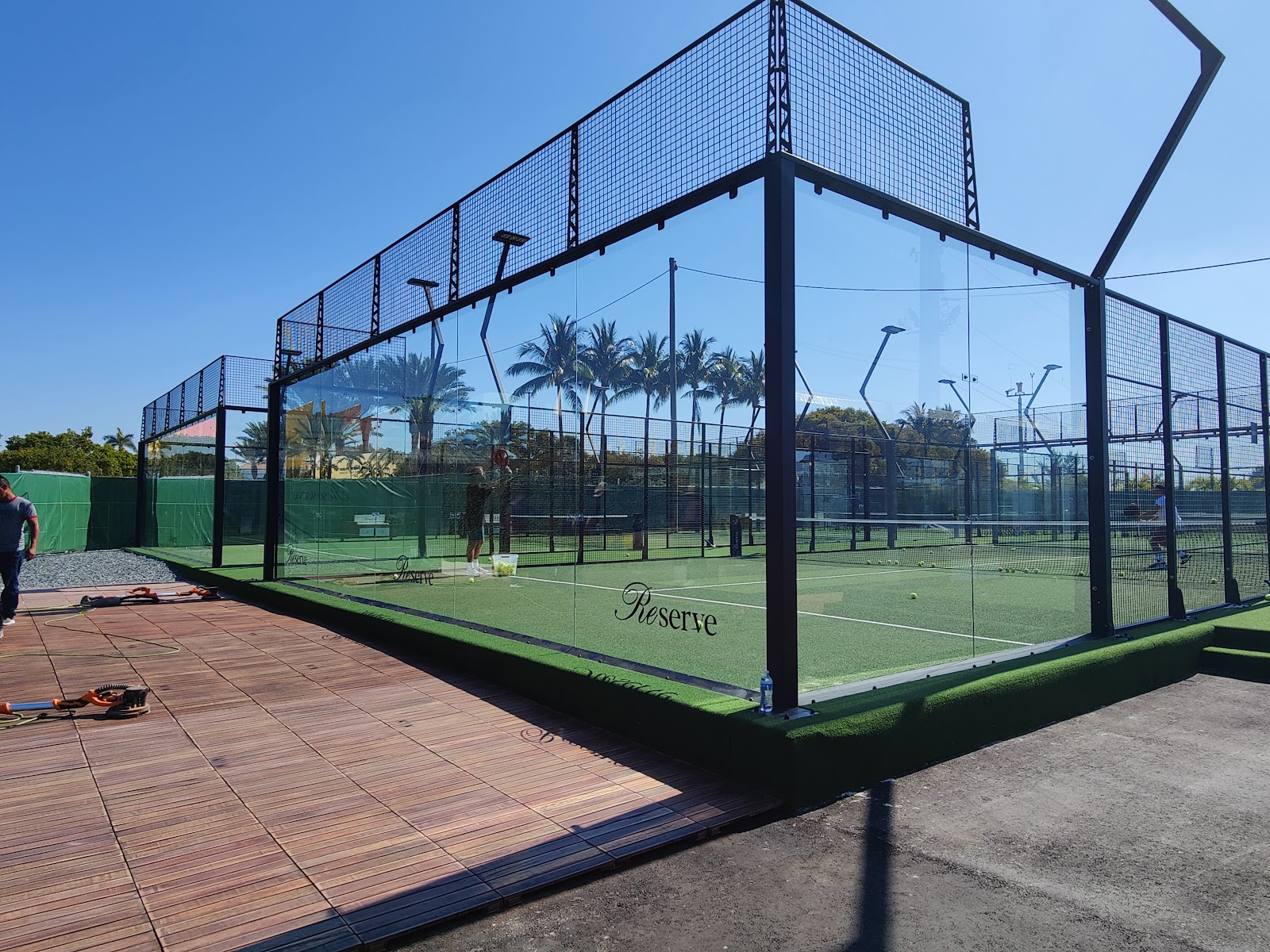
Padel looks like tennis in a glass box. It's not. It's a doubles racquet sport played on a 20m × 10m court enclosed by walls and mesh, with a paddle that has no strings, a ball nearly identical to a tennis ball, and an underhand serve. The walls are in play, which is why the game looks so confusing the first time you watch it — and why it's the easiest racquet sport to actually have fun with on day one.
This is the version of the rules and the on-court experience I wish someone had handed me before my first session.

What padel actually is
Padel is a doubles game. Singles padel exists, but the sport is built around four players on a court that's smaller than a tennis court and surrounded by walls. The ball can be hit off your own walls before you return it, and your opponent's walls are in play after the ball bounces on the floor. That's the headline rule, and it changes everything about strategy.
The paddle is a solid composite — usually fiberglass or carbon over an EVA foam core — with a perforated face. No strings. It's about 18 inches long and weighs roughly 350–375 grams. The ball is a depressurized tennis ball: same felt, same color, slightly less internal pressure, which makes rallies last longer and bounces a touch lower.
The court, in 30 seconds
You're standing in a 20m × 10m rectangle divided across the middle by a net that's 88cm tall in the center. Behind each baseline is a 3-meter glass back wall. The side walls are a mix of glass and mesh fencing, depending on the court. Service boxes are marked 6.95m from the net on each side.
Two key things to internalize:
- The walls are not the edge of the world. A ball that hits the floor in your court and then ricochets into a wall is still in play. You can let it bounce off the wall and return it.
- The serve is underhand. No 130mph aces here. You bounce the ball behind the baseline, strike it at or below your waist, and it has to land in the diagonal service box on the other side. One let, one fault per point.
Scoring, briefly
Padel uses tennis scoring almost identically: 15, 30, 40, game. Six games to win a set. Two sets to win a match. Tiebreak to seven at 6–6.
The one wrinkle worth knowing on day one: many leagues and clubs play golden point at deuce. Instead of "ad in, ad out, deuce" loops, the next point at 40–40 just decides the game. The receiving team picks which side gets the serve. It speeds up matches and makes pressure points feel like real pressure points.
For a deeper dive on scoring quirks, see Padel Scoring Explained.
Your first session: what to expect
Show up 15 minutes early. Wear court shoes if you have them — running shoes will work for one session but the lateral movement will eat them. Bring a paddle if a friend can lend you one, or rent at the club. Most clubs will have rental paddles for $5–10.
The first 20 minutes will be awkward. The paddle is heavier than a pickleball paddle and shorter than a tennis racket; your timing will be off. Your instinct will be to swing hard. Don't. Padel rewards placement, not power. The walls give your opponent a second chance on every ball, so a winner that bounces twice into the back glass is just a slow setup for a counterattack.
Here's what most beginners get wrong:
- Standing on the baseline. You can't win from there. The team at the net wins about 70% of points at the recreational level. Move forward as soon as the rally allows.
- Trying to volley everything. If a hard-hit ball is coming at your feet, let it bounce. The back wall will bring it up to you at a friendly height.
- Hitting the ball into the back glass on purpose. "I'll just hit it hard at the wall" is not a strategy. The angles do not work in your favor.
What gear you actually need
For session one: court shoes, athletic clothes, water, and a paddle (rented is fine). That's it.
For session five, when you've decided you'll keep playing: a beginner-friendly paddle in the $80–150 range, a pair of dedicated padel shoes ($90–140), and a ball can. Don't buy an advanced "diamond-shape" paddle as your first one — it has a high balance point and a small sweet spot, which means more mishits when you're learning.
We have full picks here:
How to find your first court
Most US cities now have at least one dedicated padel facility. Florida, Texas, California, and the New York metro have the densest scenes. The directory has every court we know about — search by city and book a one-hour open court for $40–80, or look for a "open play" or "social" night, which is the fastest way to find partners as a beginner.
Frequently asked questions
Is padel hard to learn?
No, padel is the easiest racquet sport to enjoy on day one. The walls give you more time to react, the underhand serve is forgiving, and rallies last longer than in tennis. Most beginners can have competitive points within 30 minutes. Mastery is hard — but having fun is not.
Can I play padel if I've never played tennis?
Yes, and you may have an advantage. Tennis players often bring bad habits: full takebacks, topspin contact above the waist, and a tendency to swing through the wall. Pure beginners learn the punch-volley and the wall game faster.
Do I need a partner to start playing padel?
Helpful, not required. Most clubs run open play or social sessions where they pair you up. Booking a private lesson for your first session is the cheapest way to learn the rules and the basic stroke without holding up a group.
Related reading
How to Serve in Padel: Technique and Common Mistakes
The padel serve is underhand and looks easy. It isn't. Here's the technique that actually wins points and the four mistakes most beginners make.
Padel for Beginners: 10 Tips That Actually Work
Ten tips that will improve your padel game in your first month. None of them involve buying gear. Most require unlearning a tennis instinct.
Padel Doubles Strategy for Beginners
The five doubles patterns every beginner should learn — positioning, movement, the lob, and how to actually win points without trying to hit winners.